Home » kale » Recent Articles:

Kale – info & recipes

June 3, 2007 Recipes 1 Comment
Kale – info & recipes

Kale, also known by the Italian name cavalo nero, is an ancient member of the cabbage family. It is an exceptional source of chlorophyll, calcium, iron & vitamin A.

Due to its high nutritional value it is often recommended as a way to consume many good nutrients.
It’s also delicious! Always purchase organic kale when possible.
As the thick stem is inedible, cut or pull the leaves off before cooking, & wash well.
Kale can be added to soup, pasta, risotto, stir-fry or eaten as a salad.

RECIPES:

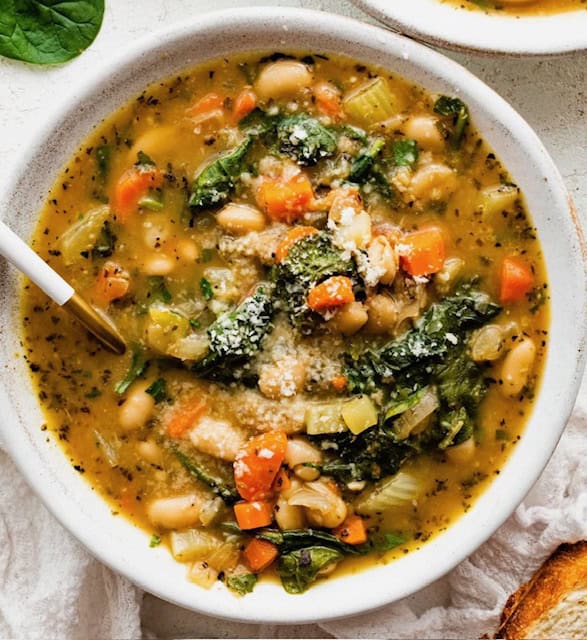
KALE AND BEAN SOUP
• 1 tbsp olive oil
• 6 cloves garlic, finely chopped
• 1 large onion, chopped
• 4 cups kale, finely sliced
• 4 cups chicken or vegetable stock
• 2 tins white beans, any variety, drained & rinsed well
• 1 tin chopped tomatoes, or diced fresh tomatoes
• 1 tsp rosemary & 1 tsp dried thyme
• a large handful chopped parsley
Heat olive oil in a large pot, sauté onion until soft, then stir in garlic & cook for a couple of minutes. Add kale & sauté until wilted. Add 3 cups of stock, 2/3 of the beans, tomatoes, salt & pepper. Simmer for 5-10 minutes. Blend the remaining beans & stock until smooth. Mix into the soup to thicken it, & simmer for 15-20 minutes.

KALE AND OLIVE PASTA
• 250g kale, finely sliced
• 400g dried pasta, any kind you like
• 3 tbsp butter or olive oil
• 4 cloves garlic, finely chopped
• ½ cup walnut pieces
• ½ cup pitted black olives
• 2 tsp balsamic vinegar
• freshly grated parmesan cheese
Cook the pasta until tender. In the meantime, blanch the kale for 5 minutes in boiling water, then drain. Heat the butter or olive oil in a large fry pan, add the garlic, walnuts or olives, & cook for 3 minutes. Add the kale, drained pasta, vinegar, salt & pepper, mix well. Cook for a further 3 minutes, sprinkle with parmesan & serve.

BRAISED KALE
• ½ large bunch kale, finely sliced
• 3 rashers bacon (or proscuitto), sliced finely
• 3 cloves garlic, finely chopped
• 3 tbsp olive oil
• 3 tsp red wine vinegar (or lemon juice)
• ¼ cup pine nuts, toasted (optional)
Put kale in a small amount of boiling water, cover & simmer very gently for 20-30 minutes, then drain. In the meantime, heat olive oil in a large fry pan, add bacon & cook until brown & crisp. Stir in garlic, fry gently for 2 minutes. Toss through kale, pine nuts, vinegar, salt, pepper & more olive oil if necessary, & cook for a few minutes.
Vegetarian version: leave out bacon or proscuitto & stir through finely grated parmesan.
Bruschetta: for kale bruschetta grill sourdough bread, brush with olive oil, rub with a garlic clove, & pile on braised kale.

SESAME KALE
• 2 cloves garlic, finely chopped
• 2 tsp fresh ginger, finely chopped
• 500g kale, finely sliced
• 2 tsp sesame oil
• 2 tbsp water
• 1 tbsp tamari
• 2 tsp sesame seeds, toasted
Heat sesame oil in a wok or large fry pan over medium heat, stir in garlic & ginger & fry for 1 minute. Add kale & water, cover, after 1 minute stir, re-cover, after 2 more minutes stir in tamari & sesame seeds.

The Health Sanctuary

The Health Emporium offers a complete health food shopping under one roof. Fresh organic fruit and vegetables, cafe & juice bar, cosmetics, vitamins & herbal supplements (including practitioner only products) organic meats, groceries & bulk foods. From local organic fruit and vegetables to organic wines – whether you are following a gluten-free; vegan; or a health conscious diet.

The Health Emporium on Bondi Road offers the best natural foods and supplements available. We provide local & organic produce, honey, dairy, and bakery goods. As well as a delicious selection of frozen foods, quality frozen meats, dairy & non-dairy cheeses, fresh tofu and fresh juices.

The Health Emporium
Address: 263 – 265 Bondi Road
Bondi NSW 2026
Call: 02 9365 6008
Web: www.healthemporium.com.au
email: info@healthemporium.com.au

OPENING HOURS
8.30am – 7.00pm
WEEKENDS
8.30am – 6.00pm

Public Holidays
8.30am – 4pm ( IF NOT CLOSED )

Our Friends

AdvertisementAdvertisementAdvertisementAdvertisement

Cateogry Posts

Ginger info & recipes

April 3, 2009

Ginger info & recipes

Ginger, botanical name Zingiber officinale, belongs to the same family as turmeric and cardamom and is native to Southeast Asia. It has been used in Asian cooking and medications for thousands of years, and was highly valued by spice traders. Ginger is available fresh, dried, pickled, preserved, crystallised and ground. Ginger aids [...]

Guide to Coconuts

March 19, 2009

Guide to Coconuts

Coconut can be eaten in many forms, fresh, dried, as coconut flour, as coconut milk, cream, or as coconut oil. Coconut oil has been used for thousands of years throughout Asia and the Pacific as both a food and a medicine. Coconut was once wrongly accused of increasing cholesterol levels, due to its [...]

Guide to oils

March 3, 2009

Guide to oils

The consumption of good quality oils is important because we need essential fatty acids in our diet to promote healthy, youthful skin and hair, support thyroid and adrenal functions, for proper functioning of the immune system, for growth and energy, for healthy blood, nerves and arteries, to transport and breakdown cholesterol, and to reduce inflammatory [...]

Carrots info & recipes

July 8, 2007

Carrots info & recipes

Carrots are such a versatile and widely loved vegetable, with extensive health benefits. Carrots are a rich source of antioxidants, particularly beta-carotene (pro-vitamin A). The anti-oxidant compounds in carrots help to protect against cancer, cardiovascular disease, to regulate blood sugars, to promote the immune system, and also to benefit vision, especially night vision. [...]

Cooking guide for legumes

June 17, 2007

Cooking guide for legumes

To prepare legumes – Before cooking, sort legumes well, picking out any small stones and then wash them thoroughly. All beans, apart from lentils, split peas and black-eyed beans, should be soaked overnight. Alternatively, a quick-soak method is to boil legumes in plenty of water for 5 minutes and then soak for 2 [...]

Cooking guide for grains

June 17, 2007

Cooking guide for grains

To prepare grains – Rinse grains before cooking. If desired, toast grains in saucepan before adding water, this will enhance the flavour. Add water and a pinch of unrefined sea salt. Boil vigorously for 5 minutes, turn heat to low, cover with a tight-fitting lid, and cook until water is absorbed. [...]

Oranges & mandarins – info & recipes

June 17, 2007

Oranges & mandarins – info & recipes

Oranges & mandarins – info & recipes
The delicious flavour, vibrant colour and beautiful perfume of oranges and mandarins mean that they are enjoyed virtually universally.
Oranges and mandarins are an excellent source of vitamin C and a good source of thiamin, folic acid, vitamin A and fibre. They are also a source of potassium, calcium, [...]

Jerusalem artichoke – info & recipes

June 17, 2007

Jerusalem artichoke – info & recipes

Jerusalem artichoke – info & recipes
Jerusalem artichokes are neither from Jerusalem nor artichokes, but are sunflower-related tubers, with a delicate nutty flavour that is slightly sweet. They are high in iron, potassium and thiamine, and also feed the healthy bacteria (lactobacilli) in the intestinal tract.
Jerusalem artichokes are good for diabetic conditions because they stimulate [...]

Sea vegetable – info & recipes

June 17, 2007

Sea vegetable – info & recipes

SEA VEGETABLES
Seaweeds are highly nutritious foods, containing large amounts of minerals and trace elements, including iron, calcium and iodine, as well as vitamins A, C and B complex.
Due to their dense mineral content sea veges are advantageous even when consumed in small quantities. Sea vegetables are beneficial for the thyroid, bones, teeth, hair, skin [...]

Cherries – info & recipes

June 3, 2007

Cherries – info & recipes

Cherries – info & recipes
The cherry season is short; they are at their best in December, so enjoy them while you can. Choose organic cherries to avoid all the pesticides in non-organic cherries.
Cherries are very good for you, with high levels of antioxidants, potassium, iron, vitamin C and B complex vitamins. Cherries contain [...]

Substituting sugar – info & recipes

June 3, 2007

Substituting sugar – info & recipes

Everyone’s diet and health could benefit by replacing the refined white sugar they eat with good quality natural sweeteners such as brown rice syrup, barley malt syrup, maple syrup, organic raw honey, palm sugar or molasses. These are all filled with flavour and are delicious.
Refined white sugar, so widely consumed in Australia, has had [...]

Organic chicken – info & recipes

June 3, 2007

Organic chicken – info & recipes

The reasons for choosing to eat certified organic free-range chicken are numerous. Organic chickens are not given hormones and antibiotics, and their feed is free from pesticides, herbicides and genetic modification. They are kept free-range, with continuous daytime access to unpolluted pasture.
Those who taste organic chicken frequently comment on how flavoursome and moist [...]

Pumpkin – info & recipes

June 3, 2007

Pumpkin – info & recipes

Pumpkin is a wonderfully healthful food, full of fibre, beta carotene, vitamin C, potassium, calcium, iron, as well as other vitamins and minerals.
Pumpkin is a member of the gourd family, which also includes watermelon and squash. Its lovely orange flesh has a mild sweet flavour. Pumpkin seeds (pepitas) are a good source of [...]

Spelt – info & recipes

June 3, 2007

Spelt –  info & recipes

Spelt is an ancient grain, closely related to modern wheat. Spelt is a nutritionally rich food, with a lower gluten and higher protein, fibre and fat content than regular wheat.
Even though spelt has a greater protein content than wheat, the protein in spelt is easier to digest, meaning often those intolerant or allergic to wheat [...]

Pears – info & recipes

June 3, 2007

Pears – info & recipes

Pears are a nutrient dense food, containing significant amounts of potassium, and vitamin C.
Additionally, they have appreciable levels of magnesium, phosphorus, calcium, iron, folic acid, carotene, vitamin B2 and vitamin E. Pears also contain high amounts of fibre. They are good for the skin, the intestines and the heart, and according to Chinese [...]

Apples – info & recipes

June 3, 2007

Apples – info & recipes

Apples are an excellent source of fibre, both soluble and insoluble. This combination helps to reduce LDL (bad) cholesterol, thus protecting against hardened arteries, heart disease and stroke.
As well as LDL cholesterol the pectin in apples removes toxins such as the heavy metals lead and mercury from the body. Apples also stimulate the [...]

Lentils – info & recipes

June 3, 2007

Lentils – info & recipes

Lentils are a nutritional super food. They are high in protein, calcium, magnesium, potassium, vitamin a and fibre, and low in fat and cholesterol, and are low g.i.
Choose organically grown lentils when possible.
Lentils are easy to prepare. Unlike other beans, lentils do not need to be presoaked. Before cooking, sort lentils well, picking out [...]

Kale – info & recipes

June 3, 2007

Kale – info & recipes

Kale, also known by the Italian name cavalo nero, is an ancient member of the cabbage family. It is an exceptional source of chlorophyll, calcium, iron & vitamin A.
Due to its high nutritional value it is often recommended as a way to consume many good nutrients.
It’s also delicious! Always purchase organic kale when [...]